Innovation

The future of voicebots in 2026: Trends and top solutions in the US market
18/09/2025
Customer expectations are shifting fast: instant answers, personalized interactions, and seamless experiences are now table stakes. Voicebots are emerging as a critical tool for delivering AI-driven customer support and 24/7 service automation, helping companies handle high volumes of interactions without compromising quality. In this article, we examine the latest trends, technologies, and top voice AI solutions USA for 2026 that are already reshaping how businesses engage with their customers.
Why voicebots are essential for CX innovation in 2026
Modern consumers expect instant, around-the-clock support, creating growing demand for cost-efficient, AI-powered customer service. Voicebots are uniquely positioned to meet these expectations while allowing companies to scale interactions without losing personalization.
Key benefits include:
- 24/7, instant responses: Customers expect immediate answers. Voice automation trends enable businesses to respond in real time, reducing friction and improving CSAT.
- Cost efficiency and scalability: AI customer service bots handle high volumes of requests with fewer resources, freeing human agents to focus on complex issues.
- Personalization and data-driven insights: Advanced voicebots analyze conversations in real time, delivering tailored experiences that increase customer loyalty and NPS.
Key technologies powering modern voicebots
To deliver intelligent, human-like interactions and drive meaningful improvements in customer experience, modern voicebots rely on a set of advanced technologies. These tools not only enable accurate and efficient responses but also allow companies to personalize interactions, understand customer intent, and measure satisfaction in real time.
Natural Language Understanding (NLU)
Natural Language Understanding (NLU) is a branch of Natural Language Processing (NLP) that enables machines to interpret and grasp the meaning behind human language. Unlike simple keyword detection, NLU captures user intent, identifies relevant entities (such as names, dates, or locations), and understands the context of the conversation.
By enabling voicebots to process nuanced or ambiguous requests, NLU ensures AI-driven support is both responsive and context-aware, enhancing overall customer experience.
Text-to-Speech (TTS) and Speech-to-Text (STT)
TTS and STT technologies allow voicebots to convert speech into text and generate natural, human-like speech in return. Modern advancements make conversations smoother, more expressive, and easier for customers to follow.
For instance, when a customer verbally asks, “Can I track my order?”, STT converts the spoken words into text for processing, and TTS delivers a clear, natural-sounding response like, “Yes, your order is scheduled for delivery tomorrow.” The result is a more engaging and trustworthy interaction, bridging the gap between human and AI communication.
Client satisfaction measurement
Modern voicebots can capture real-time sentiment and feedback during interactions. By analyzing tone, phrasing, and conversational patterns, they provide actionable insights that help companies enhance empathy and improve overall CX.
For example, if a customer sounds frustrated or repeats a request, the bot can flag the interaction for human follow-up or adapt its responses to be more supportive. These capabilities contribute to higher CSAT and NPS, giving businesses measurable insights into the quality of their AI-driven support.
Top voicebot solutions in the US for 2026
Choosing the right voicebot is critical for delivering AI-driven, personalized customer experiences. In 2026, businesses will need solutions that combine robust AI capabilities, seamless integrations, and scalability. Below is a snapshot of leading voicebot platforms in the US market.
Smile.CX
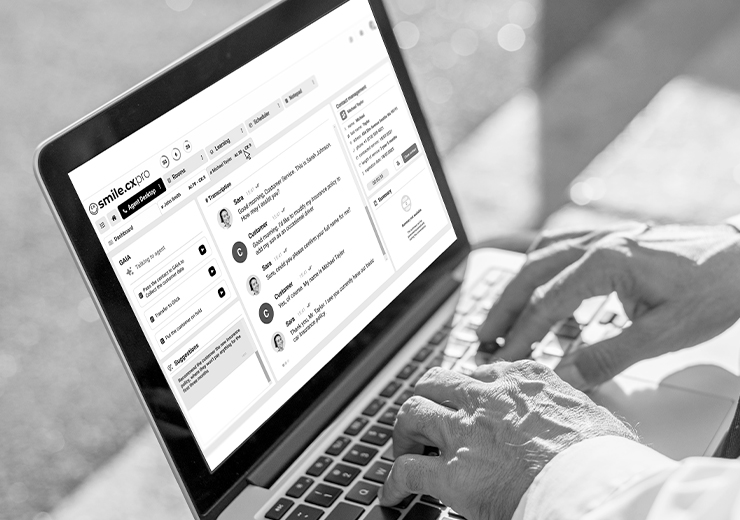
Smile.CX combines advanced NLU technology enhanced by proprietary Large Language Models (LLMs) with an empathetic approach to customer interaction. The platform can respond, call, and chat with customers, adapting to their preferred channel: voice, phone, or messaging. By understanding each customer’s specific needs and preferences, Smile.CX not only provides accurate responses but also proactively suggests the right channel at the right moment.
In addition to customer engagement, Smile.CX supports lead qualification and automates repetitive processes, driving significant cost reductions. Every interaction is designed to be human-guided, empathetic, and adaptable over time, ensuring both efficiency and a personal touch.
Key benefits:
- Human-in-the-loop supervision to safeguard CX quality.
- Omnichannel engagement across voice, phone, and chat.
- Reduced customer waiting times.
- Supports true multi-call handling for simultaneous customer interactions.
- Fewer escalations and lower pressure on agents.
Amazon Lex
Amazon Lex is Amazon’s conversational AI service, built on the same technology that powers Alexa. It enables businesses to design, build, and deploy voice and text interfaces that scale seamlessly across industries. Thanks to its integration with the AWS ecosystem, Lex is particularly appealing for companies already operating within Amazon’s cloud environment.
Key benefits:
- Robust deep learning-based NLU.
- Native integration with AWS services for scalability.
- Enterprise-ready for high-volume interactions.
Google Dialogflow
Google Dialogflow is one of the most widely used conversational AI platforms, offering powerful natural language understanding and support for multiple languages. It allows companies to deploy voicebots across various channels, from mobile apps to smart devices, ensuring consistent customer experiences.
Key benefits:
- Strong multi-language capabilities.
- Easy integration with Google Cloud ecosystem.
- Broad deployment options across web, mobile, and IoT devices.
Cognigy
Cognigy is an enterprise-grade conversational AI platform focused on end-to-end automation. It combines voice and chat capabilities with workflow orchestration, enabling companies to create complex, multi-step customer journeys that can scale globally. As a strategic Prime Partner of NICE, Cognigy integrates seamlessly with the CXone ecosystem, reinforcing its position as a leading solution for enterprises seeking AI-first customer service transformation.
Key benefits:
- Strong orchestration for complex workflows.
- Unified platform for both voice and chat automation.
- Highly customizable for enterprise use cases.
SoundHound / Houndify
SoundHound’s Houndify platform is recognized for its real-time voice recognition and advanced conversational intelligence. Known for speed and accuracy, it allows businesses to create voicebots that interact in a natural, human-like manner, making it popular in sectors like automotive and consumer electronics.
Key benefits:
- Fast, accurate voice recognition.
- Natural, human-like interactions.
- Flexible customization for brand-specific experiences.
IBM Watson Assistant
IBM Watson Assistant brings enterprise-grade AI to customer interactions, with a strong focus on data-driven insightsand multichannel support. It enables companies to not only provide accurate responses but also extract valuable business intelligence from customer conversations.
Key benefits:
- Advanced analytics and sentiment detection.
- Secure and compliant enterprise environment.
- Flexible deployment across voice, chat, and IoT.
Microsoft Azure Bot Service
Microsoft Azure Bot Service offers scalable voice and chatbot solutions tightly integrated with the Microsoft ecosystem. It allows businesses to deploy intelligent bots across multiple channels, supported by Azure’s enterprise-grade security and compliance.
Key benefits:
- Seamless integration with Microsoft products and Azure AI.
- Scalable for global enterprise deployments.
- Strong security and compliance features.
How to successfully integrate voicebots into your CX strategy
Implementing a voicebot goes beyond simply deploying new software, it requires a strategic approach to align technology with business goals and customer expectations. Companies that succeed typically follow a structured process:
- Define clear objectives: Identify where voicebots can add the most value, whether reducing call center volumes, improving first-contact resolution, or providing 24/7 self-service.
- Start with high-impact use cases: Focus on processes with high interaction volume and repetitive queries to maximize ROI quickly.
- Ensure seamless integrations: Voicebots should connect smoothly with CRM, ERP, and customer data platforms to deliver contextual and personalized experiences.
- Balance automation with human touch: Implement escalation paths for complex cases to maintain customer trust and avoid frustration.
- Monitor performance and refine continuously: Use KPIs such as CSAT, NPS, average handling time (AHT), and containment rate to track success. Regularly refine intents and conversational flows to improve accuracy and empathy.
Enterprises that view voicebots not just as a cost-saving tool, but as a core driver of CX innovation, are the ones that will capture the greatest competitive advantage in 2026.
Conclusion & next steps
By 2026, voicebots will no longer be a “nice-to-have,” but a foundational element of customer service strategies in the US market. To stay ahead, businesses should:
- Begin experimenting with AI-driven customer support now, focusing on measurable outcomes.
- Evaluate leading voice AI solutions USA.
- Adopt a test-and-learn approach, ensuring continuous optimization and alignment with evolving customer expectations.
The future of voice automation trends is not just about replacing human agents. It’s about enhancing customer experience with AI that is faster, smarter, and more empathetic.
Discover how Smile.CX can elevate your CX strategy. Contact our experts to learn more about the future of voice AI solutions in the US market.